The British Athletics Cross Challenge 2018-19 at Sefton Park… What does it take to organise such an event?
On November 24, The British Athletics Cross Challenge visits Sefton Park for the third event of the series, following races previously held in Cardiff and Milton Keynes.
The series has held an event at Sefton Park every year since the 2006-07 season, proving to be a popular location for athletes involved in the challenge. Sefton has frequently been chosen as a venue due to the accessible location, as well as the changing facilities and parking spaces available. Furthermore, the course is safe for both competitors and spectators and doesn’t interfere with traffic on the road.
In last year’s European Cross Country Trials event at Sefton Park, Emelia Gorecka used her knowledge of the course to come out on top in the women’s race, whilst Ben Connor sealed victory in the men’s contest.
Across the course of the day, there will be 10 different races with 7 distances. These range from a 1.9km under 11’s race to a 9.8km Seniors Men’s race.
With thousands of athletes running in these different races, the event organisers have their work cut out to ensure everyone is at the right place, at the right time.
For added complication, this particular event also incorporates European Cross Country Championship Trials for senior, Under 23s and Junior athletes. The European Championships take place in the city of Tilburg in the Netherlands on December 9th.
To get a sense of how much work there is to be done for the event organisers, it should be noted that the UKA (UK Athletics) Event Organisers Guide consists of 24 chapters across 57 pages.
Some of the things that must be considered range from financial planning, to risk assessments and medical provision. It is highlighted that planning a well-organised event will start at least one year before the competition begins, where topics such as dates, number of competitors and venues will be discussed. The cost of hosting such an event also has to be brought into careful consideration.
However, it is the sheer number of people who are required to run such an event that is most impressive. A championship event will require an organising committee consisting of:
- Chairman/director
- Clerk of the course
- Entries secretary
- Publicity officer
- Finance officer
- Officials secretary
- Fund raiser
- Catering manager
- Changing facility manager
- Medical liaison
- Police/car parking liaison
- Local authority parks representative/land manager as appropriate
- Volunteer recruitment manager
- Committee secretary
Although some roles may be paid, a lot of the individuals who help organise the competition are unpaid volunteers. Without the help of these volunteers, it would be impossible for the competition to function. A lot of the times individuals will have to carry out more than one role due to lack of volunteers.
The organising committee must also ensure that medical considerations are in place and that there is a clear unobstructed route from the medical HQ to the roads leading to the nearest A&E department.
Another crucial element to the organisation is the timings of each race. With so many races happening over just one day during winter, there is only a short window of daylight where the races can take place. Time must also be allocated at the end of the day for cleaning up. The younger age groups participating in the events usually begin proceedings so that they avoid worn surfaces.
One of the main event leaders, Arwel Williams, who has he been involved with organising the events for the past 30 years, spoke about the difficulties he has faced whilst preparing for the championships. “A the end of the day we are all volunteers, I don’t just do this one I will also be organising the World Trails in March as well. I have done that for the past 3/4 years.
“The problem is the age profile of the officials. I’m 60 now and been in the sport since my mid-thirties, we try get some more people involved in the sport because by the time my generation finishes there will be nobody left to do it. We get the odd young person involved because without the officials this event won’t go on.”
When asked about his responsibilities preparing for the day itself, Arwel went into detail about how much work goes into creating a successful event. “I’ll be making sure everything works, I’ve got a meeting today two weeks before the event and on the Wednesday before hand I’ll be checking everything is okay for the course. We will then start marking the course on the Thursday and on the Friday, we get the supplies come in with the barriers and we will be marking the course out fully with tape and pins. The event then takes place on the Saturday and everything is de-rigged by Saturday night.”
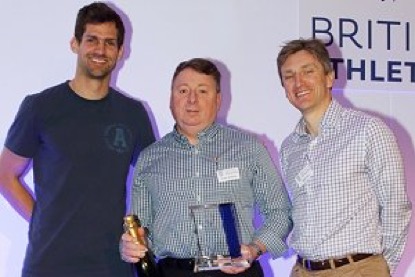
(Arwel Williams, Centre)
Arwel also explained how most people don’t realise how much work is put into organising these events, as frequent hour long meetings are needed to plan for such events, and that as much as 40 hours work is put into creating a successful platform for the championships to go ahead.
If you would like to help out as a volunteer in planning these events, visit https://www.britishathletics.org.uk/get-involved/volunteer to submit an application.
Furthermore, applications are still open to compete in the British Athletics Cross Country challenge at Sefton Park on November 24th, visit the following link in order to submit your application before the deadline ends on Wednesday 14th November. https://uka.org.uk/competitions/the-british-athletics-cross-challenge/ .
 WGM News